> For the complete documentation index, see [llms.txt](https://docs-embed.anyflow.jp/llms.txt). Markdown versions of documentation pages are available by appending `.md` to page URLs; this page is available as [Markdown](https://docs-embed.anyflow.jp/wizard-editor/widget/mapping.md).
# マッピング
## 概要
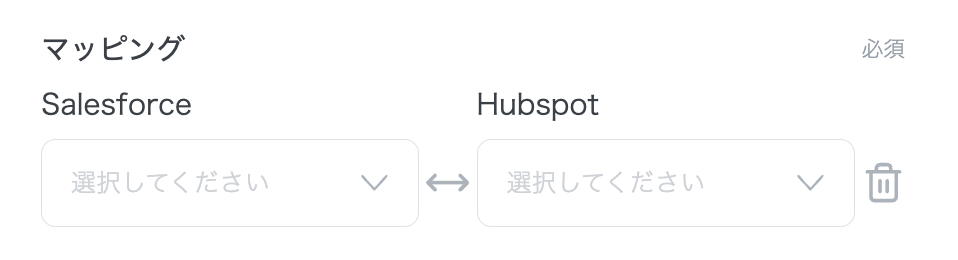
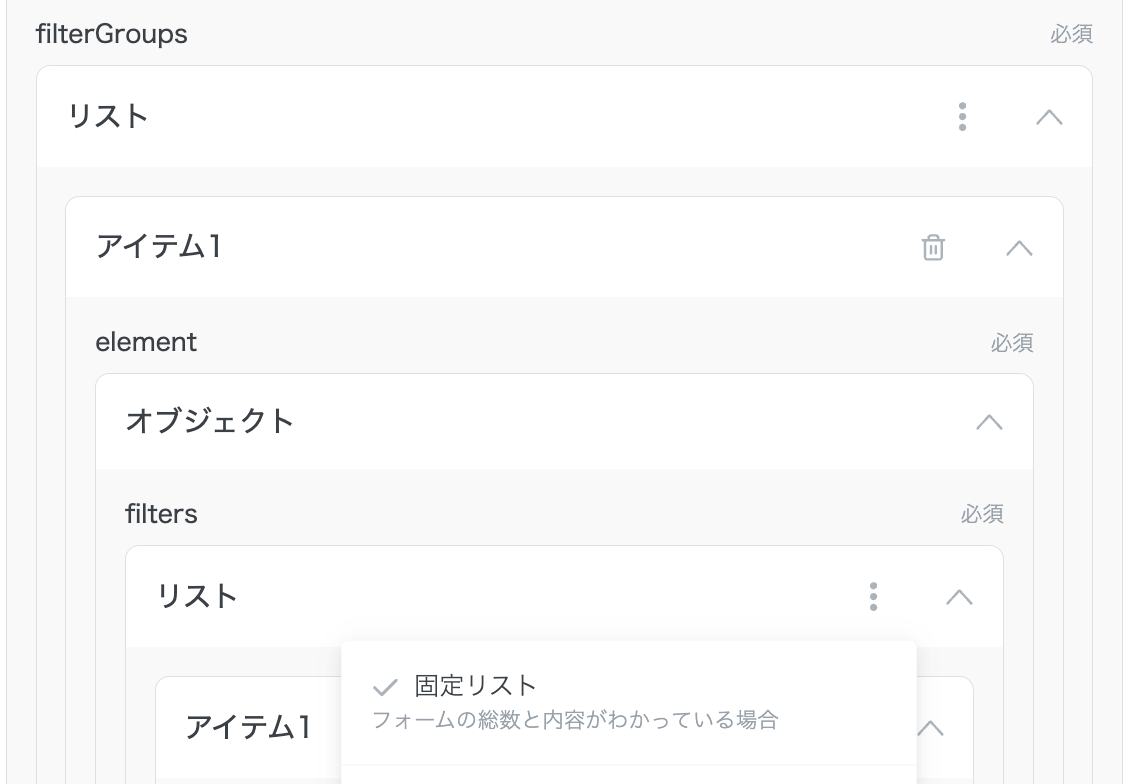
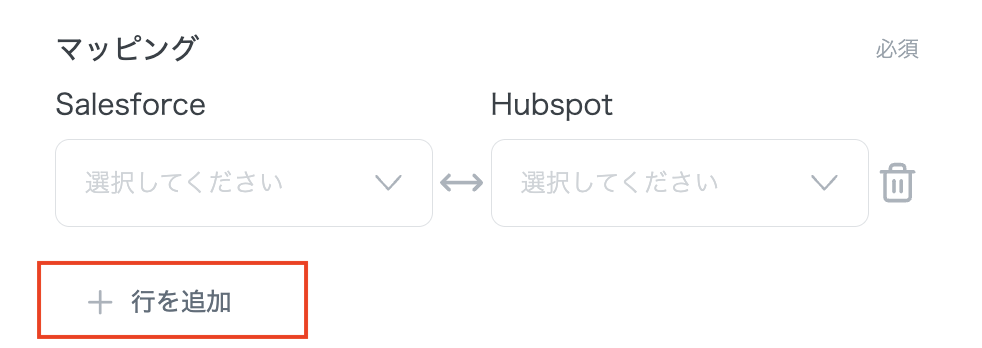
マッピングは、異なるコネクタ間でデータの紐づけを行うためのウィジェットです。\
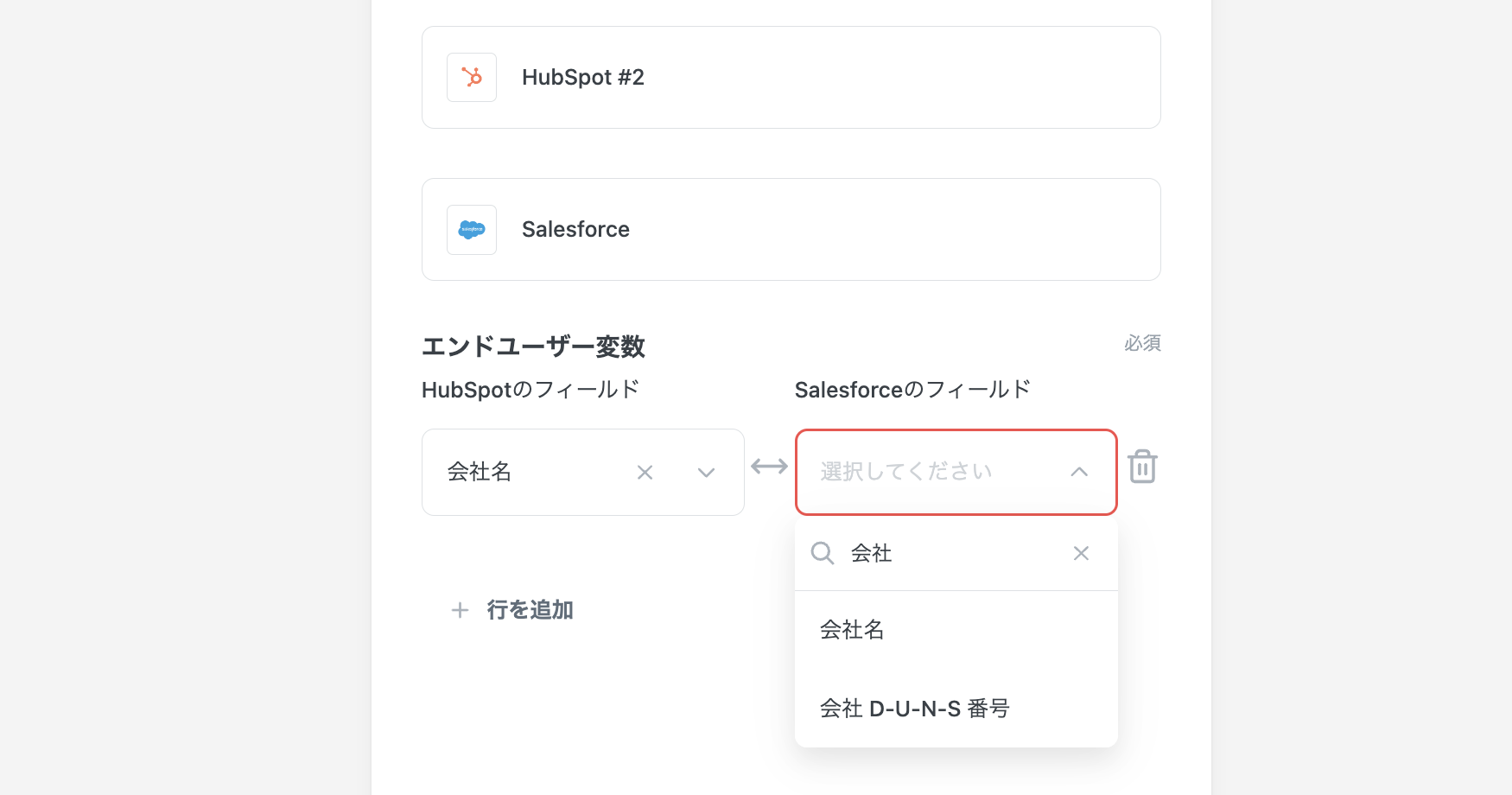
以下の例では、HubSpotとSalesforceのフィールドの紐づけを行っています。
{% hint style="success" %}
### ヒント
エンドユーザーは「行を追加」を行うことで、紐づけを行う項目を追加することができます。
{% endhint %}
## 設定方法
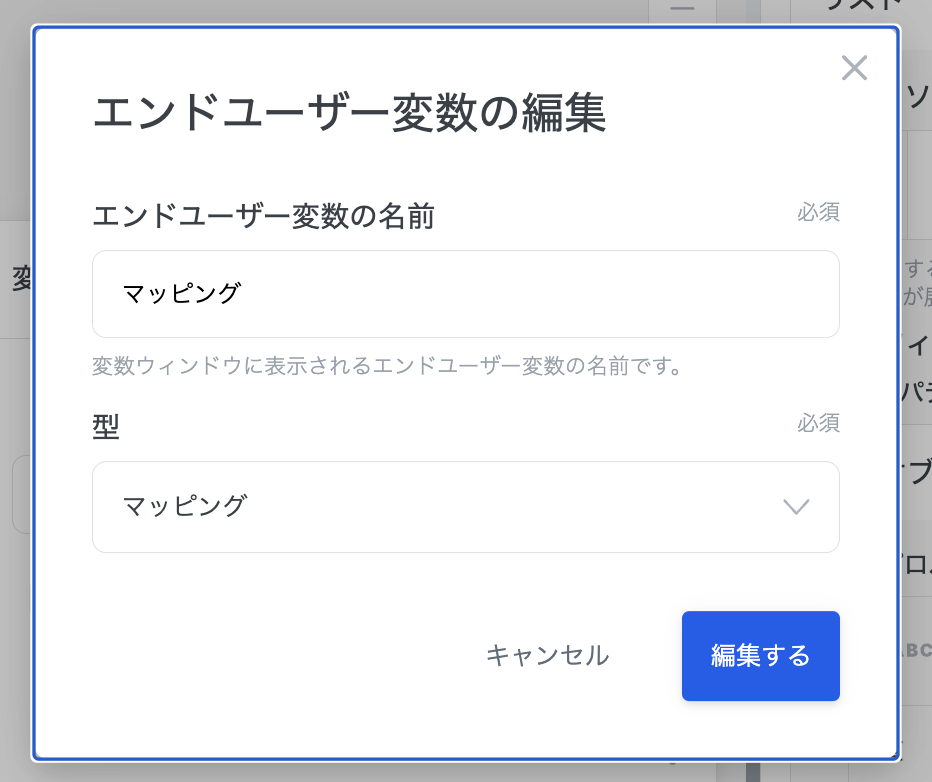
ソリューションエディタでエンドユーザー変数を追加し、型は「マッピング」を選択します。
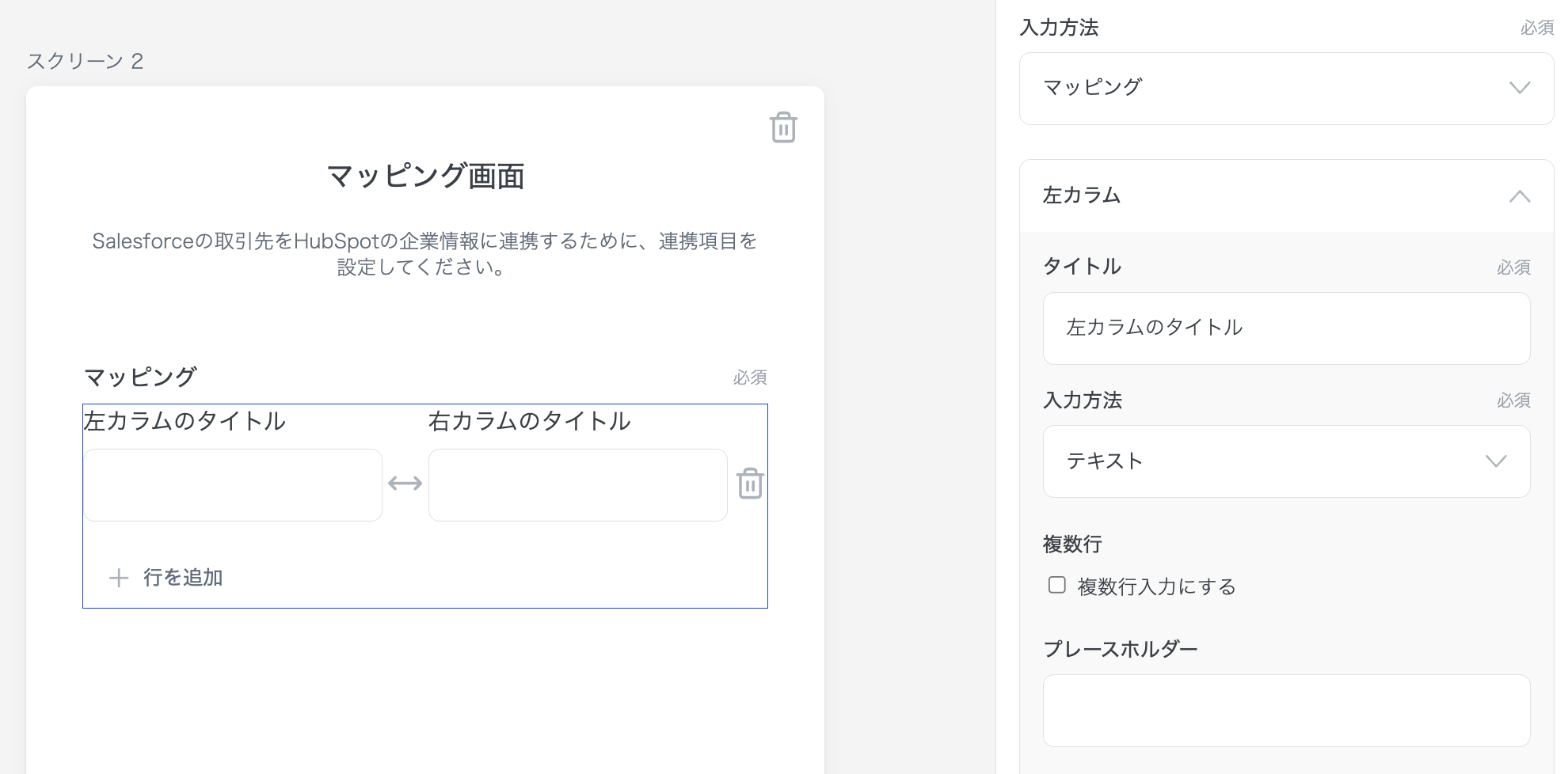
作成したエンドユーザー変数をウィザードに割り当てます。
左カラム・右カラムそれぞれに、タイトルや入力方法などを設定できます。
各カラムの入力方法は [基本的な入力ウィジェット](/wizard-editor/widget.md#nawijetto) から選択できます。
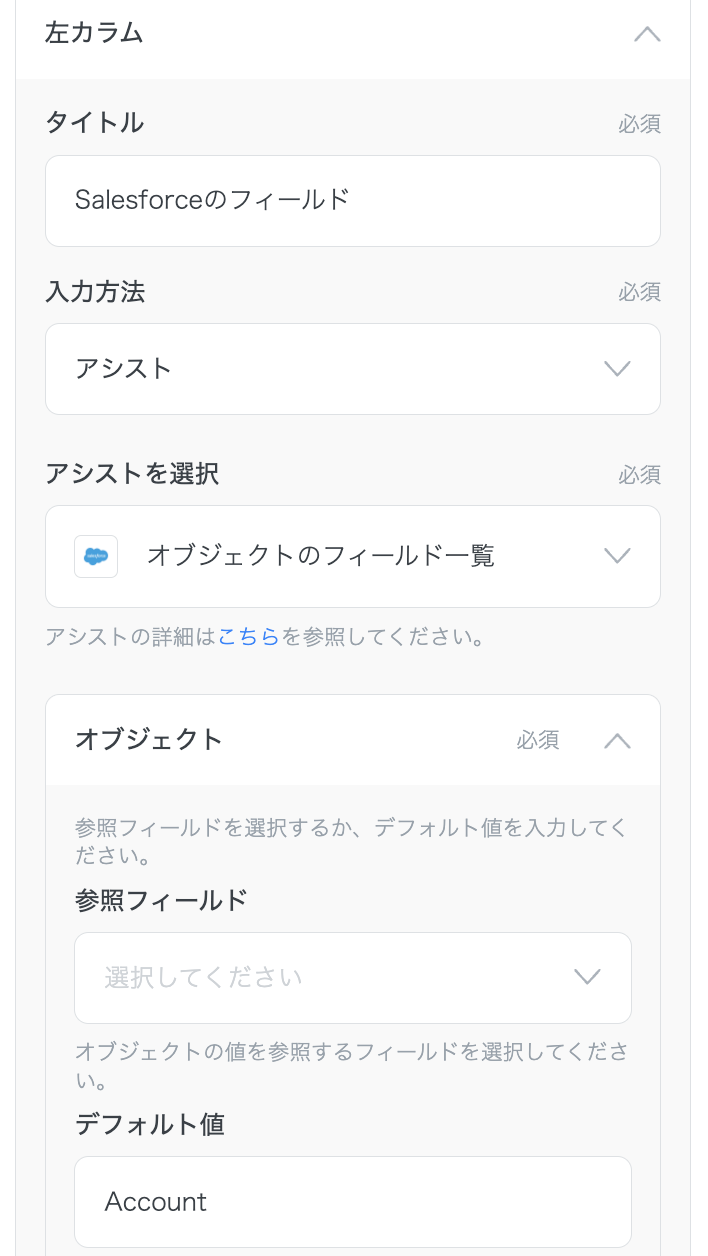
例として、左カラムにSalesforceの取引先フィールドをアシストするように設定する場合は、以下の通りになります。
## 使用例
### Salesforceの新規取引先をHubSpotの会社へ連携する
エンドユーザー変数で「マッピング」を作成します。
ウィザードの設定は以下の通りにします。
**左側:Salesforceの「オブジェクトのフィールド一覧」のアシスト**\
**右側:HubSpotの「企業情報読み込み可能フィールド一覧」のアシスト**
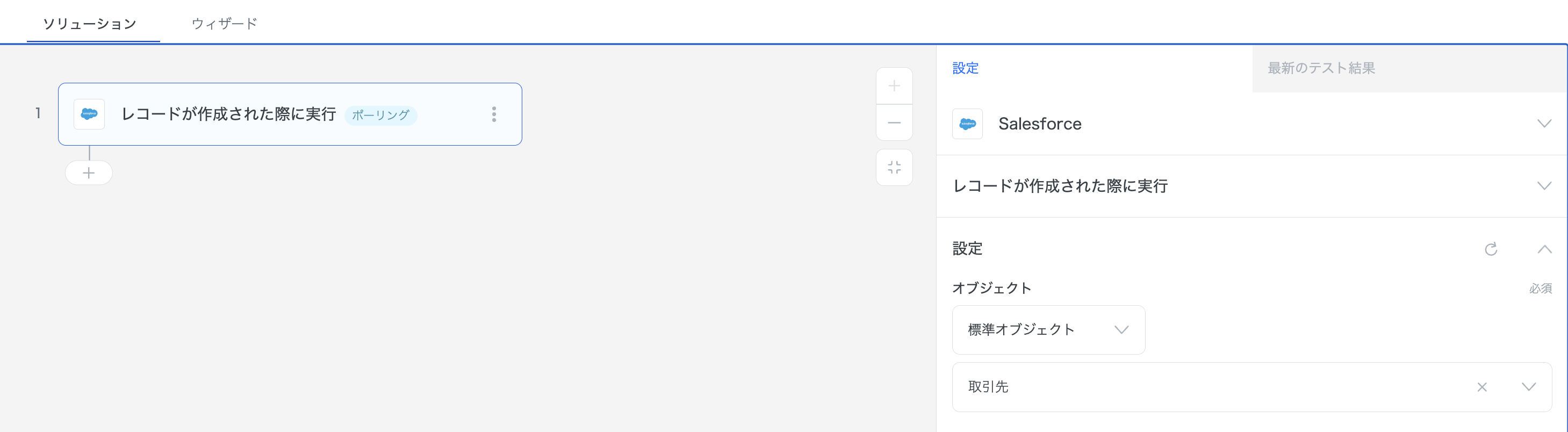
ソリューションのトリガーにSalesforceを設定します。
「レコードが作成/更新された際に実行」で、「取引先」オブジェクトを設定します。
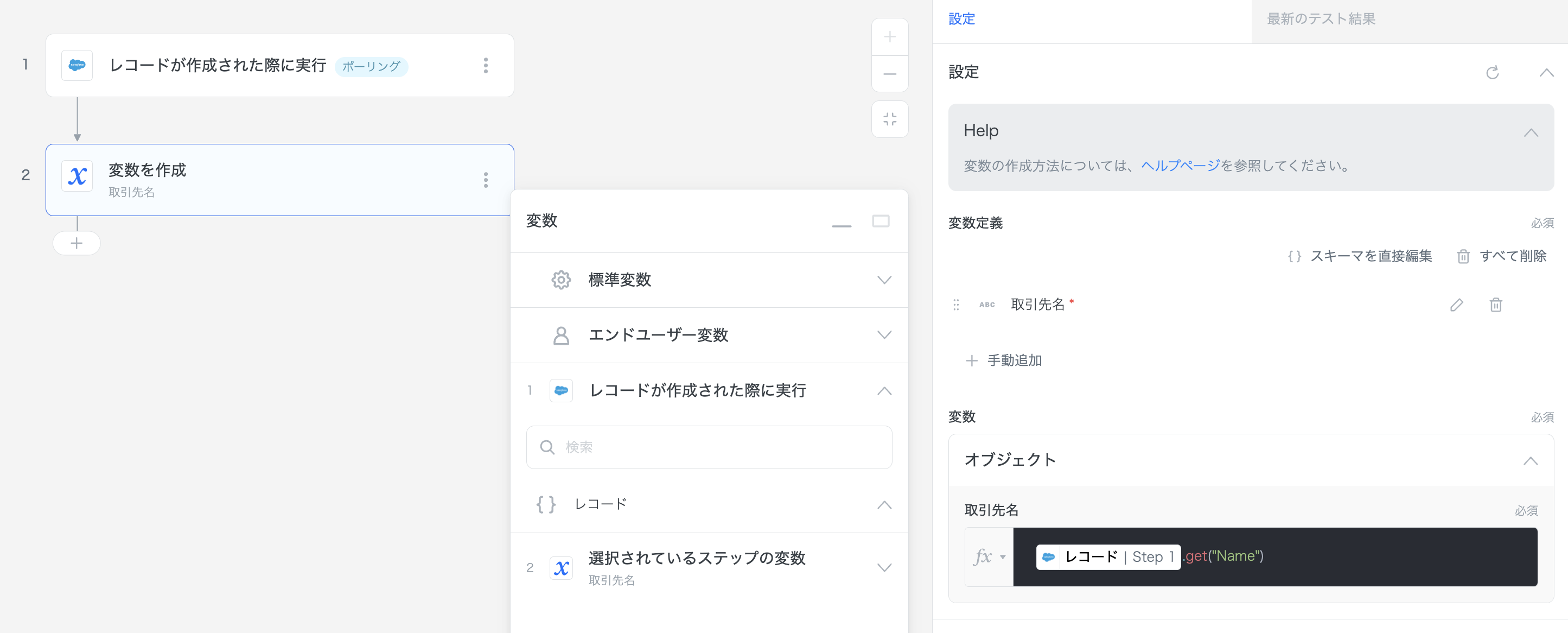
「変数を作成」アクションで「取引先名」という変数を追加します。
変数の値は、[Formulaモード](/solution-editor/common-specs/formula.md)で`{レコード}.get("Name")`とします。
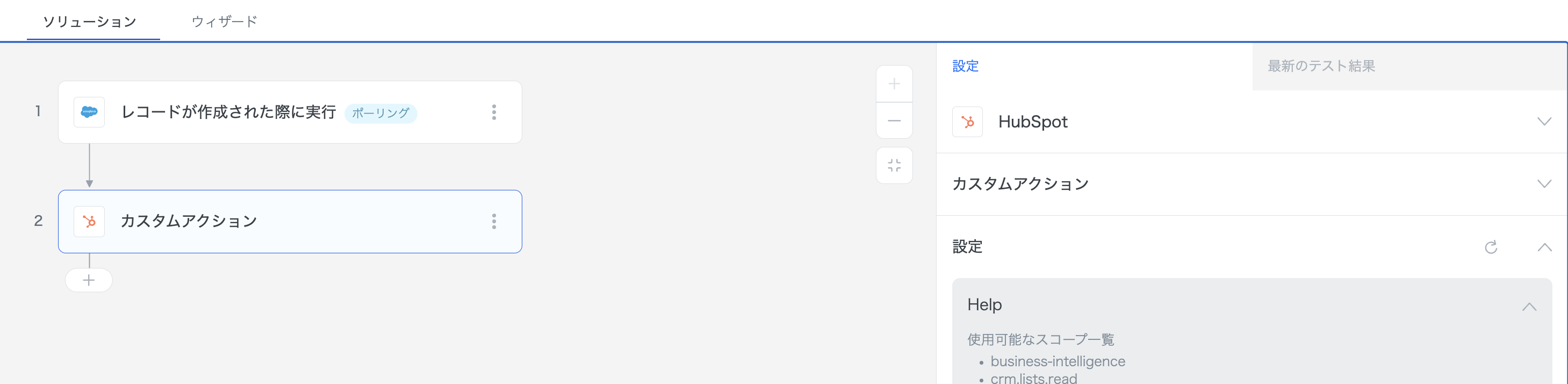
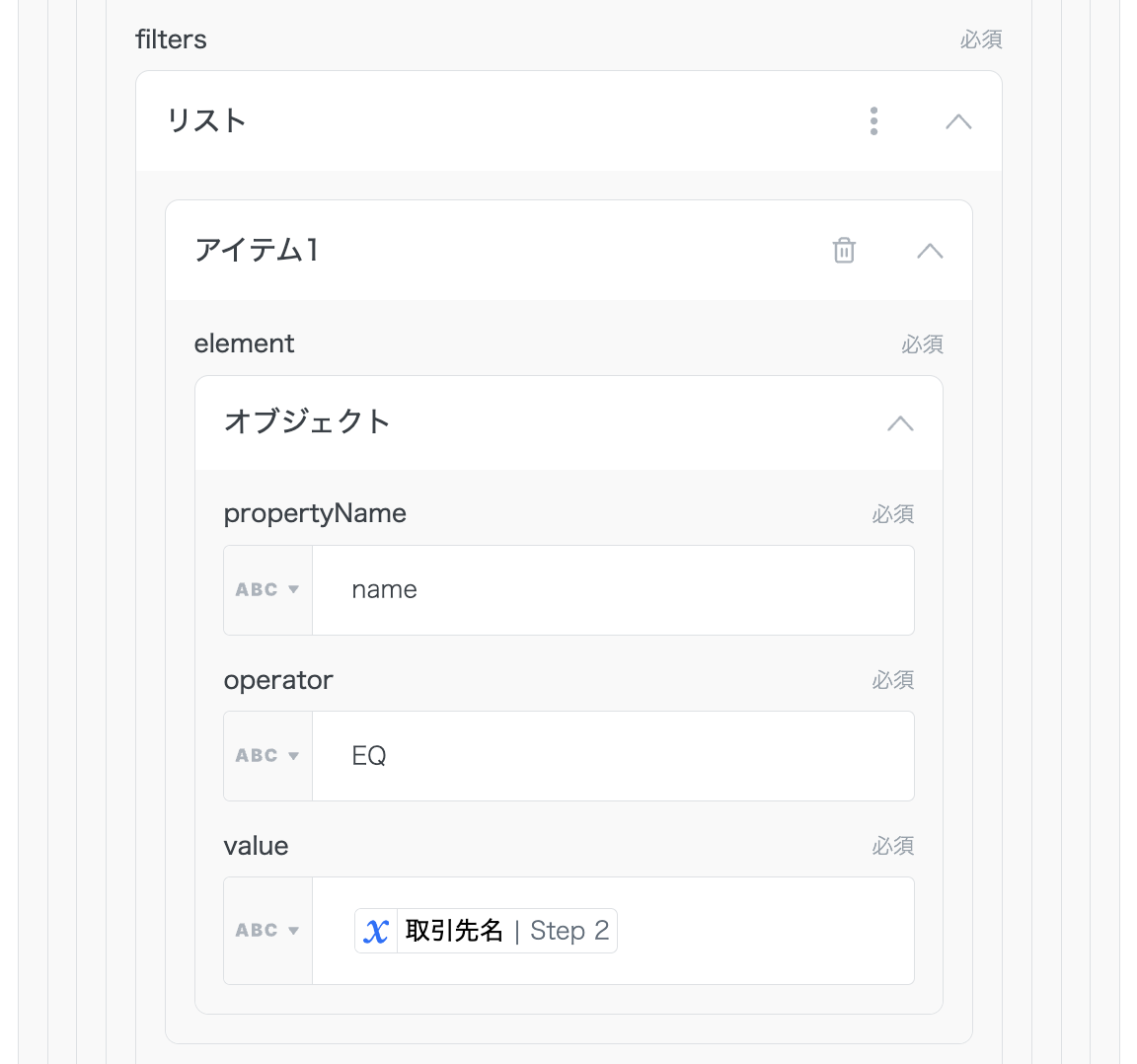
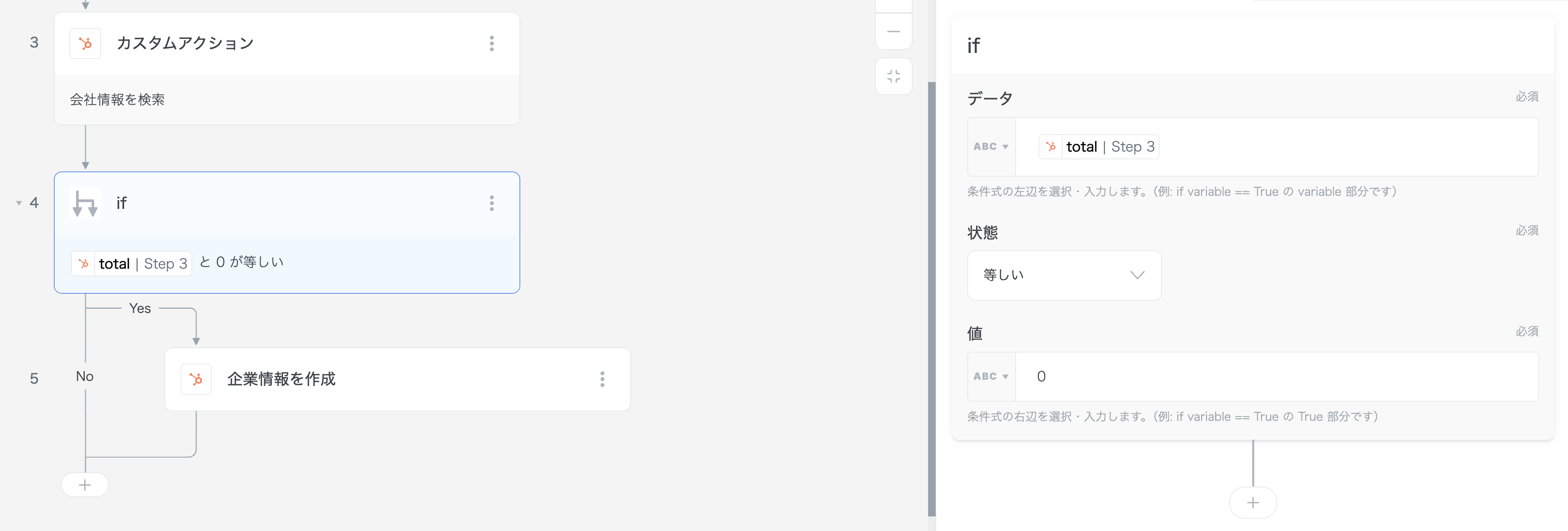
次にHubSpotのカスタムアクションを追加し、既に同一の会社名がないかを検索します。
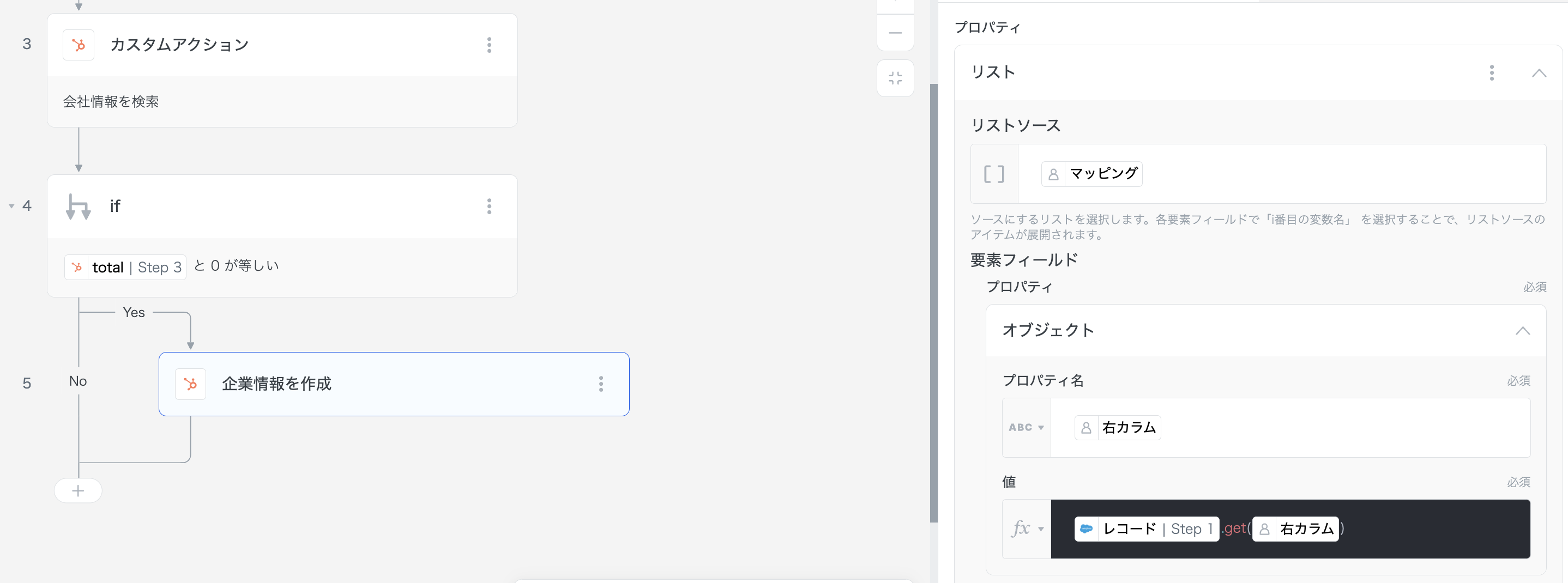
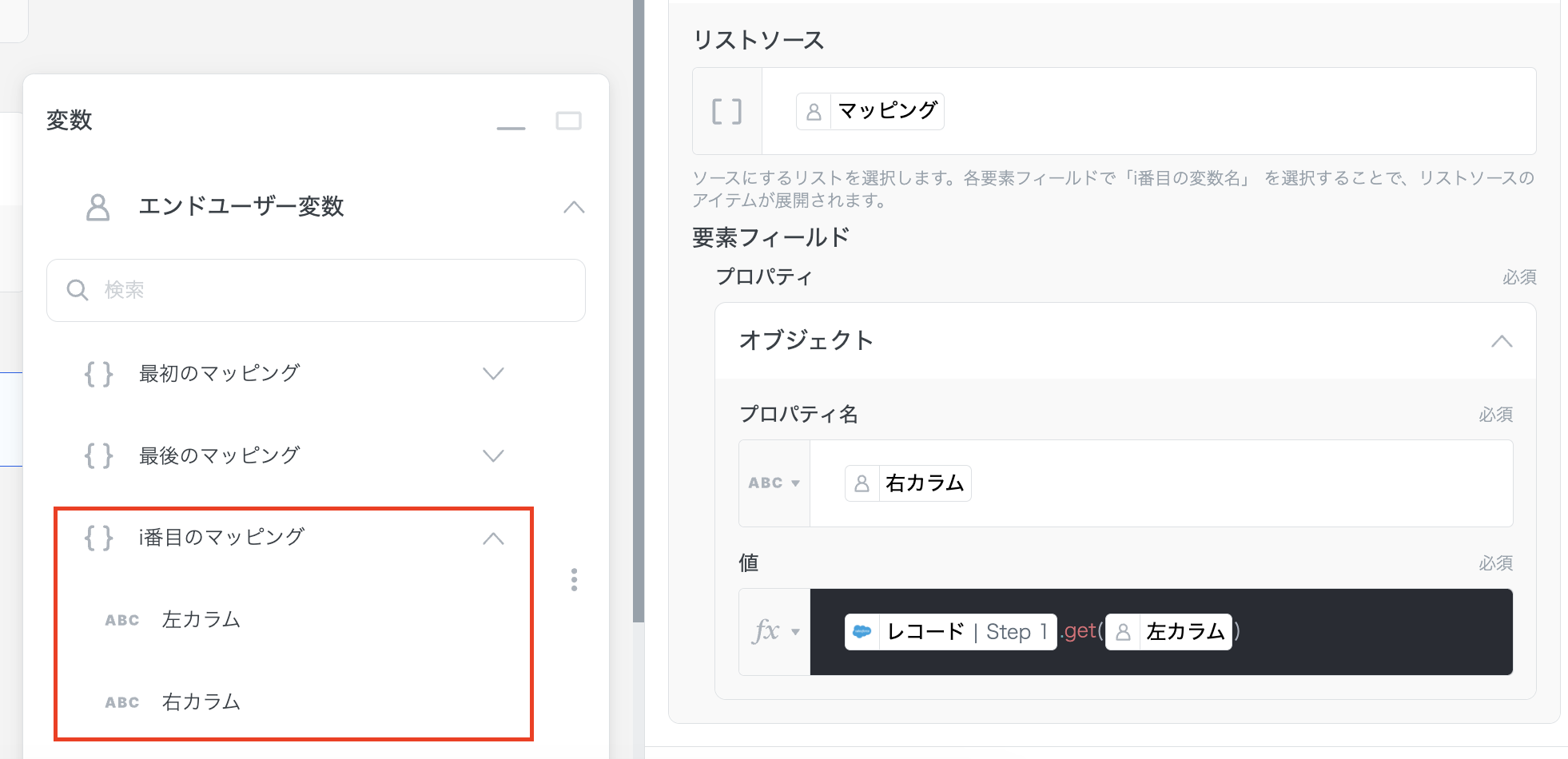
プロパティの設定では、`i番目のelement` から選択を行います。
プロパティ名:`{ 左カラム }`
値:`{ Salesforce レコード }.get( { 左カラム } )`
を設定します。
これにより、
**マッピングの右側で設定した「HubSpotのプロパティ」に**
**マッピングの左側で設定した「Salesforceのプロパティ」が持つ値**
を書き込むことができます。
{% hint style="success" %}
### ヒント
HubSpotで会社レコードを作成する場合は `会社名(name)` が**必須**となります。\
このような場合、[デフォルト値を指定](/wizard-editor/advanced-setting/default-value.md)しておくことで、あらかじめ会社名がマッピングの行に含まれた状態で表示できます。
{% endhint %}
---
# Agent Instructions
This documentation is published with GitBook. GitBook is the documentation platform designed so that both humans and AI agents can read, navigate, and reason over technical content effectively. Learn more at gitbook.com.
## Querying This Documentation
If you need additional information that is not directly available in this page, you can query the documentation by asking a question.
Perform an HTTP GET request on the following URL with the `ask` and `goal` query parameters:
```
GET https://docs-embed.anyflow.jp/wizard-editor/widget/mapping.md?ask=&goal=
```
`ask` is the immediate question: it should be specific, self-contained, and written in natural language.
`goal` is what the user is ultimately trying to achieve, the reason they need the answer. Sharing it helps GitBook give you a better, more relevant answer. A goal is most helpful when it describes the outcome the user wants rather than restating the question. For example, with `ask=how do I create an API token`, a goal like `automate deployments from our CI pipeline` lets GitBook tailor the answer to that use case.
The response will contain a direct answer to the question and relevant excerpts and sources from the documentation.
Use this mechanism when the answer is not explicitly present in the current page, you need clarification or additional context, or you want to retrieve related documentation sections.