> For the complete documentation index, see [llms.txt](https://docs-embed.anyflow.jp/llms.txt). Markdown versions of documentation pages are available by appending `.md` to page URLs; this page is available as [Markdown](https://docs-embed.anyflow.jp/solution-editor/variables/enduser.md).
# エンドユーザー変数
エンドユーザー変数とは、ウィザードを介してエンドユーザーからの入力を受け取るための変数です。
受け取った値は、通常の変数と同様にソリューションの中で利用することができます。\
他のシステムにデータを渡すことや、エンドユーザー変数を元に条件分岐をすること、エンドユーザー変数のデータを加工することなどが行えます。
例: エンドユーザーから入力されたSlackのチャンネルにメッセージを投稿する、チェックボックスを使ってエンドユーザーの入力によってロジックを分岐させる等
[ウィザードでスクリーンにエンドユーザー変数を配置](/wizard-editor/about.md#endoyzno)し、ウィザードから入力された値は、エンドユーザー変数としてソリューション内で変数としてステップで利用できます。
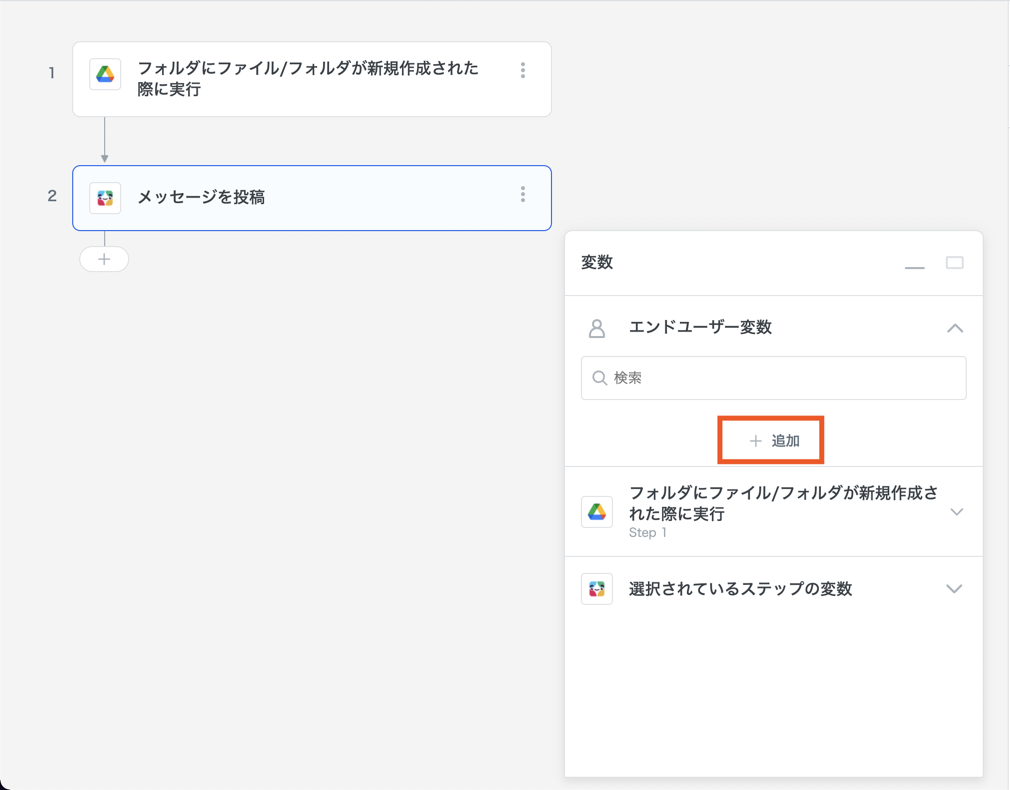
エンドユーザー変数を作成するには、変数ウィンドウのエンドユーザー変数から、追加を押下します。
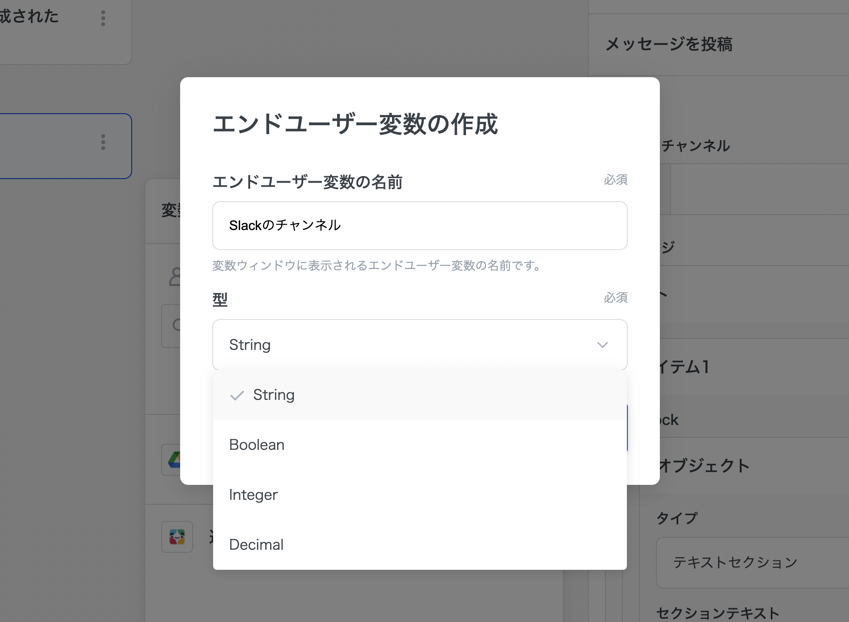
追加を押すと、以下のスクリーンショットのようなモーダルが表示されます。\
`エンドユーザー変数の名前` は、管理しやすいように好きな名前をつけてください。
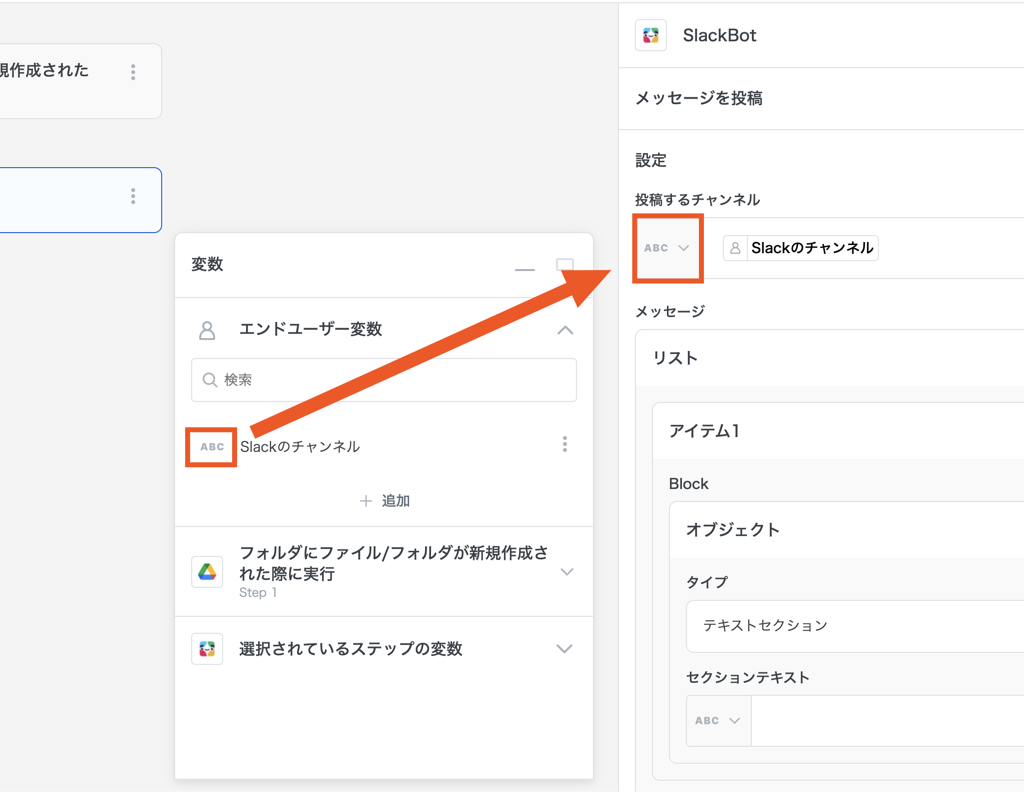
[変数の型](/solution-editor/variables.md#xing) は、エンドユーザー変数を使用するステップの入力フィールドの型に合わせて作成する必要があります。
例えば、SlackBotアプリの、`メッセージを投稿` アクションの `投稿するチャンネル名` フィールドで受け付ける型はStringなので、エンドユーザー変数の型もStringで作成する必要があります。
## **エンドユーザー変数を削除、編集する**
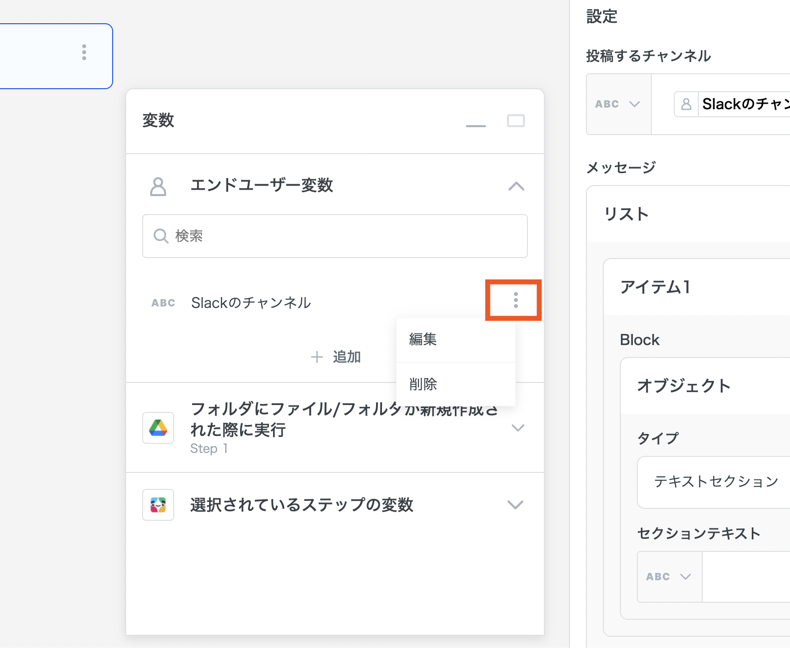
作成したエンドユーザー変数を編集、削除するためには、「︙」を押下することでメニューが表示されます。
{% hint style="danger" %}
### ヒント
ソリューション内のステップの入力フィールドで使われているエンドユーザー変数を削除した場合、ソリューションが正しく動作しない可能性がありますので、削除する際には注意して削除を行ってください。
{% endhint %}
---
# Agent Instructions
This documentation is published with GitBook. GitBook is the documentation platform designed so that both humans and AI agents can read, navigate, and reason over technical content effectively. Learn more at gitbook.com.
## Querying This Documentation
If you need additional information that is not directly available in this page, you can query the documentation by asking a question.
Perform an HTTP GET request on the following URL with the `ask` and `goal` query parameters:
```
GET https://docs-embed.anyflow.jp/solution-editor/variables/enduser.md?ask=&goal=
```
`ask` is the immediate question: it should be specific, self-contained, and written in natural language.
`goal` is what the user is ultimately trying to achieve, the reason they need the answer. Sharing it helps GitBook give you a better, more relevant answer. A goal is most helpful when it describes the outcome the user wants rather than restating the question. For example, with `ask=how do I create an API token`, a goal like `automate deployments from our CI pipeline` lets GitBook tailor the answer to that use case.
The response will contain a direct answer to the question and relevant excerpts and sources from the documentation.
Use this mechanism when the answer is not explicitly present in the current page, you need clarification or additional context, or you want to retrieve related documentation sections.